Not a Preference but a Necessity: Flexible Transport Solutions During the Pandemic
Not a Preference but a Necessity: Flexible Transport Solutions During the Pandemic. Since the first COVID-19 case in Turkey was announced on 11 March, a great deal in our lives is no longer what it was. The way we step outside is different; going out without a mask on our face and disinfectant or cologne in our hand is now unthinkable. The way we greet our closest friends is different — those familiar handshakes and hugs are gone. And of course

Not a Preference but a Necessity: Flexible Transport Solutions During the Pandemic

Since the first COVID-19 case in Turkey was announced on 11 March, a great deal in our lives is no longer what it was. The way we step outside is different; going out without a mask on our face and disinfectant or cologne in our hand is now unthinkable. The way we greet our closest friends is different — those familiar handshakes and hugs are gone. And of course, just like our social lives, our working lives — which take up almost half the day — have changed by 180 degrees.
Many companies closed their offices temporarily after the first case was announced, and millions of office workers moved their working setup home from Monday 16 March until nearly the first days of June. In a city like Istanbul, where life is lived on the street, three months of working from home was comfortable for some employees but brought serious problems into the lives of others. With schools closed in particular, employees with children at home faced significant difficulties — both in productivity and psychologically — caught between looking after their children and joining meetings during the day. On top of that, employees who could not create a separate workspace at home found themselves in a working pattern with no boundaries around office hours. Once the "normalisation" process announced by the government as of 1 June was added to all of this, we began to see white-collar employees return to the office little by little, in a variety of arrangements.
While habits changed across so many areas of our lives, working from the office caught the same wind of change. As many companies "opened" their offices on 1 June, they did not force employees to come in; they tried to keep the office population below a certain number with a booking system, and made every effort to ensure employees felt no anxiety about their health while trying to increase productivity.
In a city like Istanbul, where roughly 9 million people travel to work by public transport every day, a change in how people get to and from work is inevitable while a virus whose primary countermeasure is "social distancing" is part of our lives. Giving employees a travel allowance and asking them to use public transport stopped being an option for most companies. Some companies found the answer in renting vehicles, while others offered a fuel allowance to employees who own a car and tried to get people to the office by having them bring along colleagues who live nearby. Those who chose the car-rental route ran into a serious budget problem, while those who chose the colleague-carpooling model faced the problems of placing too much responsibility on the car owner, of not being able to travel at a safe social distance, and of losing flexibility. And for the roughly one million people in Istanbul who use a shuttle every day — neither public transport nor a private car — employers had to work out weekly shift plans continuously, serious inefficiencies arose because 16-seat shuttles were sometimes used by only one or two people, and dissatisfaction grew out of not being able to respond flexibly enough to rapid change.
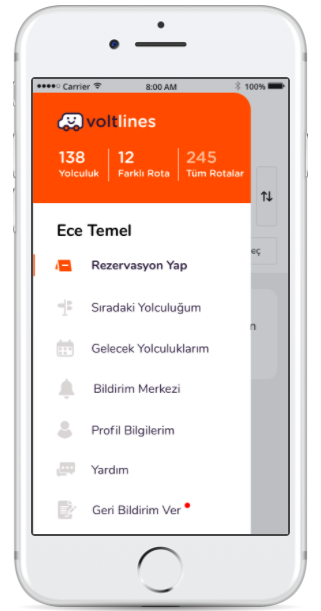
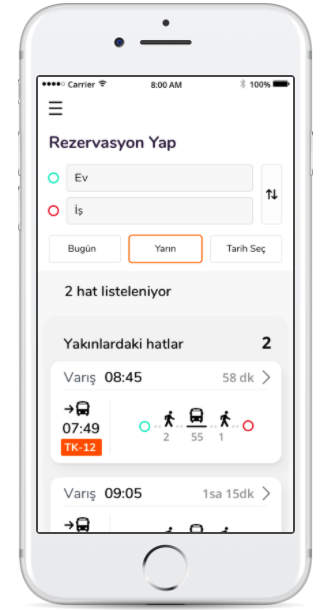
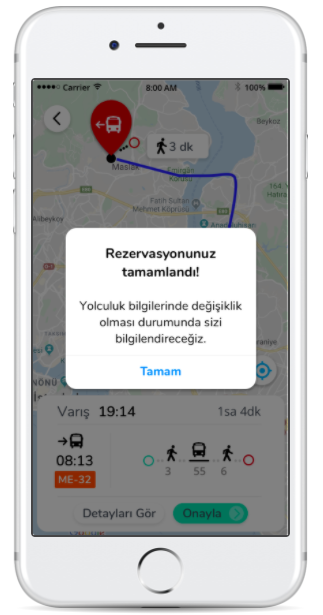
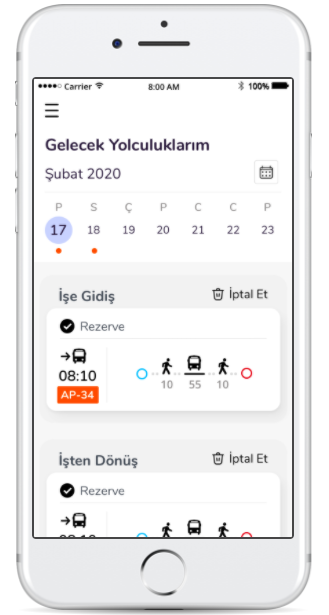
In the "new normal", where we now come into the office on flexible days, we at Volt Lines are delighted to offer our on-demand, flexible, hygienic and affordable transport solution — the "Volt Lines DRT – Flexible Transport" package — to every company in Istanbul. Employees included in the "Volt Lines DRT" system only need to book through the Volt Lines mobile app one business day before the day they intend to travel. With these subscription packages, companies that need flexible transport solutions will be able to pay only for what they use , and give their employees a regularly disinfected means of transport that is more advantageous, safer and more hygienic than taking a taxi.
Volt Lines DRT – Flexible Transport For detailed information about the system: www.voltlines.com