Scaling Corporate Transportation Without Losing Operational Discipline
Scaling corporate transportation sounds simple from the outside: add vehicles, win customers, and serve more routes. In practice, it means learning how to grow without letting service quality, cost control, or decision-making discipline slip.
Scaling corporate transportation sounds simple from the outside: add vehicles, win customers, and serve more routes. In practice, scaling corporate transportation means learning how to grow without letting service quality, cost control, or decision-making discipline slip.
I joined Volt Lines in July 2024. Since then, one of the most important lessons for me has been that growth is rarely about doing more of the same. At some point, the way you operate has to change, because the habits that work at one scale often stop working at the next.
Growth Exposes the Weaknesses You Could Previously Ignore
When an operation is smaller, many problems can be solved through individual effort. Someone notices an issue, calls the right person, and fixes it. A customer request can be handled through a quick message, and a service problem can often be solved because someone simply knows who to call.
That becomes harder as the business grows. More customers, routes, vehicles, drivers, and operational exceptions create more opportunities for small problems to become recurring ones. What used to be manageable through experience and personal relationships eventually needs a repeatable process.
At Volt Lines, we found that growth forced us to become more structured. We had to clarify ownership, improve escalation routines, and make operational performance easier to see. We also had to become more disciplined about which issues required immediate action and which ones pointed to a deeper process problem.
That distinction matters. If the same type of issue appears several times, solving each case individually is no longer enough. The real question becomes why the issue keeps happening and what needs to change in the system.
This is where scale starts to test an organization. More volume does not only create more work. It reveals unclear roles, fragmented data, inconsistent routines, and decisions that depend too heavily on individual people.
The lesson for us was simple: adding capacity does not automatically create scalability. The operating model has to grow with the business. For this purpose, we have changed our organizational model to deepen our regional know-how, while increasing control mechanisms through our Operational Excellence Team.
Fleet Growth Is Only Useful If Fleet Quality Improves
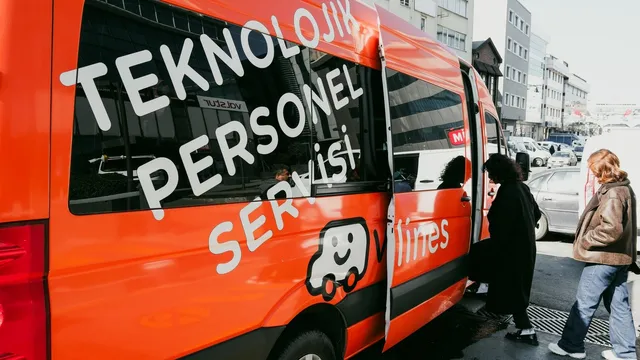
One area where this became very tangible was our own fleet.
Our owned fleet increased from 44 vehicles to 70 vehicles. During the same period, the average vehicle age decreased from 7.5 years to 4 years.
For us, those two numbers needed to move together. Increasing fleet size without improving fleet quality would have solved only part of the problem. More vehicles can create more capacity, but capacity alone does not guarantee reliability or a better passenger experience.
Fleet quality has a direct operational impact. Newer vehicles can support more predictable maintenance, reduce the risk of service disruption, and improve the experience for both passengers and drivers. They can also make planning easier because fewer unexpected issues need to be absorbed by the operations team.
At the same time, newer vehicles come with higher capital requirements. That means fleet decisions cannot be separated from demand, utilization, route economics, and customer requirements. Buying more vehicles is not a strategy by itself.
We Learned to Look at Growth Through More Than Revenue
Revenue growth matters, but it does not tell you whether the underlying business is becoming stronger.
A company can grow revenue while creating operational complexity, accepting unattractive economics, or becoming too dependent on a few customers. That is why we started looking more closely at what was happening underneath the top-line number.
We focused more on customer acquisition, customer losses, sales conversion, service performance, fleet economics, and the quality of the operating rhythm behind the numbers. We also paid more attention to whether different functions were looking at the same reality.
That changed some of our management conversations. Instead of only asking, “How much did we grow?”, we increasingly asked, “What produced that growth, and can we repeat it?”
Those questions lead to different decisions. A new customer may add meaningful revenue, but the value of that customer also depends on the operating model required to serve them. A route may look attractive at first, but its economics can change once driver cost, fuel, maintenance, insurance, highway costs, and other variable expenses are fully understood.
The same principle applies to commercial performance. Winning more business is useful only if the organization can onboard, operate, and retain that business at the expected service level.
This is where cross-functional visibility becomes important. Sales cannot operate independently from operations. Operations cannot be separated from finance. Customer management cannot be disconnected from service performance. The same customer journey touches all of them.
We learned that some of the most useful management discussions happen when those perspectives are brought together. A service issue may have started with a commercial assumption. A margin issue may be related to an operational design choice. A customer retention problem may have appeared in service data before it became visible commercially.
For me, this is one of the biggest differences between growth and scalable growth. Growth is an outcome. Scalability is the system that makes the outcome repeatable.
What I Would Do Earlier
If I were starting the same journey again, I would introduce some management disciplines earlier.
I would define ownership and escalation rules before growth made them necessary. Clear ownership sounds basic, but it becomes increasingly important when several teams are involved in solving the same customer or operational issue.
I would also connect sales, operations, finance, and customer management data earlier. When those functions work from different data points, teams can spend too much time debating what happened instead of deciding what to do next.
I would create stronger routines around recurring problems as well. When an issue appears more than once, it should become a candidate for root-cause analysis rather than another isolated fix.
Most importantly, I would spend less time asking whether the company was growing and more time understanding the quality of that growth.
That means asking whether customers stay, whether service levels remain consistent, whether pricing reflects the real cost to serve, whether the organization can absorb more volume, and whether managers have the information they need to make decisions quickly.
These are not questions you solve once. As a company grows, the answers keep changing.
That is still how we are approaching the next stage at Volt Lines. We are continuing to grow, but the objective is not simply to become bigger. It is to build an operation that can handle more complexity without transferring that complexity to our customers.
For me, that is the real test of scale. Customers should experience reliability and simplicity, even when the operation behind the service is becoming larger and more sophisticated.
If you are evaluating how employee transportation could work differently in your organization, explore Volt Lines' corporate transportation solution and request a demo.