The Invisible Fleet: Ali Halabi at the Dii Desert Energy Leadership Summit
On 1 October, our Founder and CEO Ali Halabi spoke at the 16th Dii Desert Energy Leadership Summit in Istanbul. The day was hosted at Yeo’s battery factory, in a session on energy transformation success stories. Ali’s keynote was titled “The Invisible Fleet: Unlocking Corporate Mobility as a New Lever in the Energy Transition”.
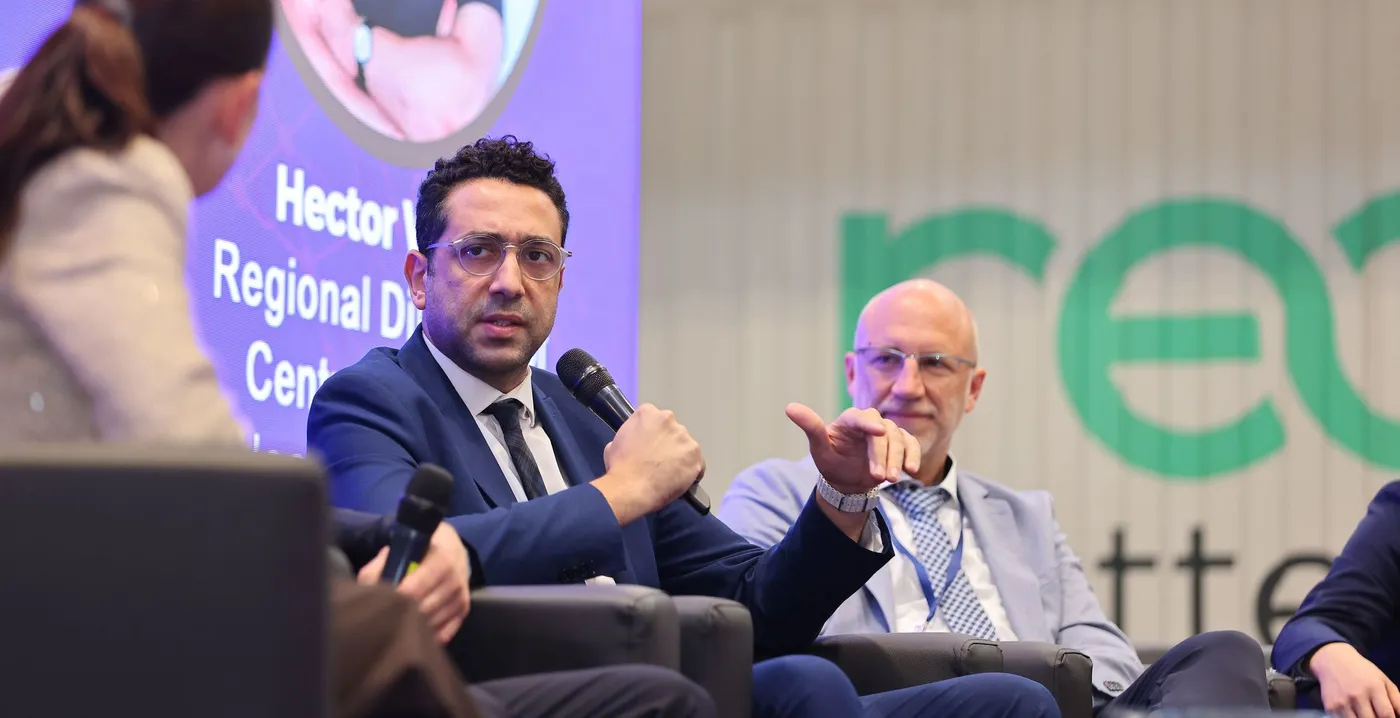
The room was full of people who think about fleets of turbines, solar panels and batteries. Ali’s point was simple: most cities have a fleet that almost nobody counts.
A fleet between the bus and the car
Transport produces about a quarter of energy-related CO2, and almost half of that comes from cars and buses carrying people. The commute is the most predictable part of it: 460 trips per employee every year, on the same route and at the same time.
Corporate, factory, campus and school shuttles carry many of those trips. They are not public transit, and they are not private cars. That leaves them out of most grid plans and EV programmes, and many of them still run on spreadsheets and phone calls.

“What you cannot see, you cannot electrify,” said Ali Halabi.
Why the commute is the easiest place to start
Shuttle fleets have four features that make them easy to electrify:
- They run fixed routes, so the energy each trip needs is known in advance.
- They return to the same depot every night, so charging can be installed where the vehicles already park.
- One employer contract moves hundreds of commuters at once.
- They sit parked at midday, between the morning and evening runs, exactly when solar output peaks.
“Shuttles sleep when the sun works,” said Ali Halabi. “Every parked shuttle is a battery waiting for the sun.”
Five steps, one platform
Ali walked through our roadmap to the future of shared mobility: Digitalisation, Optimisation, Electrification, Green energy and Autonomy. The first two are already scaling. Our platform has completed more than 7 million trips since 2018 and carries over 15,000 passenger trips a day. Route optimisation delivers up to 31% better route efficiency, and more than 90% of riders on managed routes use the app.
“Electrification without the data layer is just a more expensive bus,” he said.

He closed with four requests to the energy leaders in the room:
- Put shuttle fleets into grid and transition plans.
- Build solar, storage and charging at the depots.
- Price midday charging so it rewards the solar window.
- Use route data to plan the grid.
From the stage to the road
Four weeks later, we put the keynote into practice. Phase 3 of our roadmap is now live, and our first electric buses are carrying Siemens Türkiye employees on their daily commute.
If you work in energy, or you are an employer thinking about how your commute fits your sustainability goals, our team is happy to talk. We can look at your routes together and see where electrification makes sense.


Let's review your shuttle operation together
We'll look at your current routes and occupancy rates and map out the savings potential.